
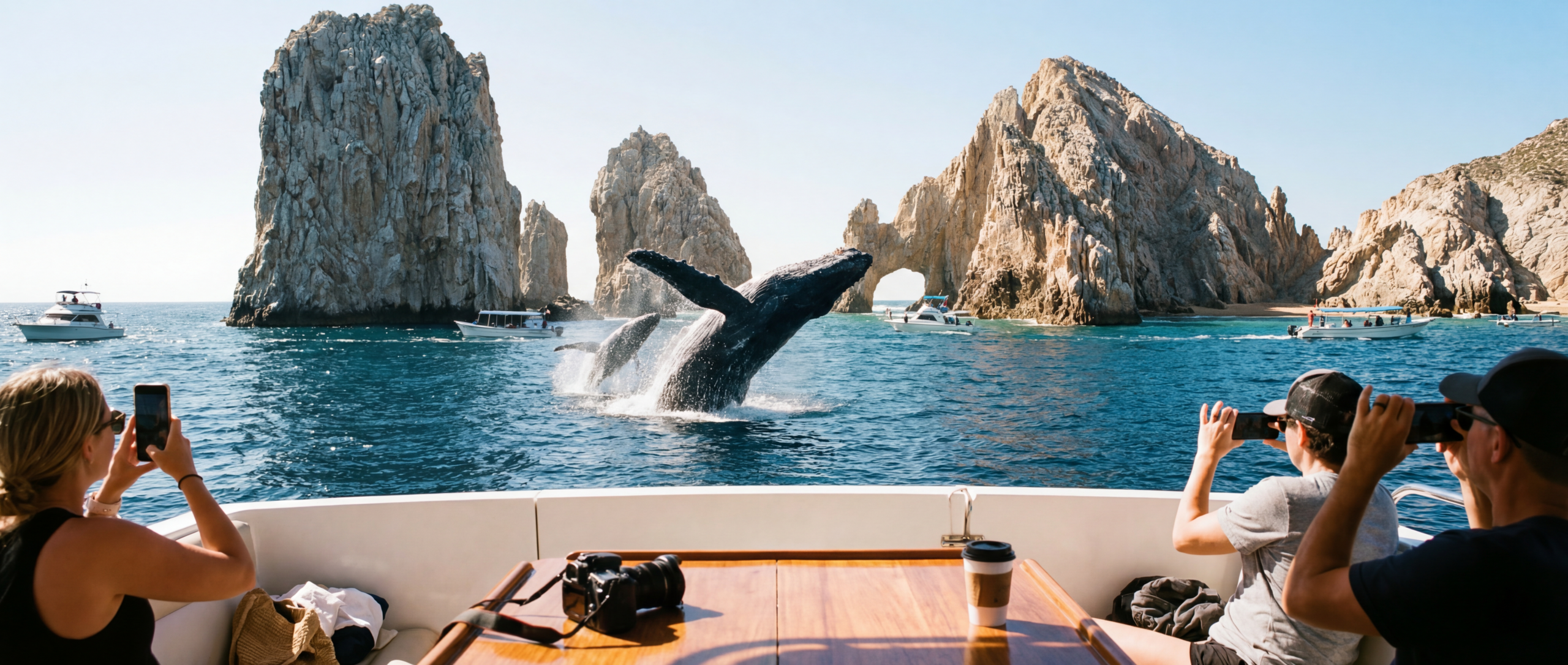
Last Chance for Whales
Cabo’s Season Ends April 15
Every winter, the waters off Cabo San Lucas become a stage for one of nature’s greatest performances. Humpbacks breach, gray whales migrate, and calves take their first breaths. But the curtain closes April 15.
I’ve been taking friends and family out to see the whales here for over a decade. And every year, around mid-April, something shifts.
The whales start gathering their calves. The breaches become less frequent. And by April 16, the lagoon goes quiet again. If you’ve been waiting for the “perfect time” to see these giants up close—this is it. Here’s everything you need to know before the season wraps up.
What You’ll See Before April 15
Late season is prime time for mothers and calves—the most heartwarming encounters of the year.
Humpback Whales
Most acrobatic of all whales – they breach, tail slap, and sing complex songs. December through March is peak, but sightings continue into mid-April. Expect full-body breaches that will leave you speechless.
Gray Whales
The “friendly whales” of Baja. They migrate 10,000 miles round trip from the Arctic to calve in Mexican lagoons. By April, mothers are teaching calves to breach—an unforgettable sight.
Blue Whales (Rare)
If you’re lucky, you might spot the largest animal on Earth. Blue whales pass through the Sea of Cortez in late winter and early spring. A rare treat in the final weeks of season.
Where to Get the Best View
🌊 Cabo San Lucas Bay
The most accessible spot. Whales gather just outside the bay, often breaching within sight of the Arch and Lovers Beach. Morning tours have the calmest seas.
🏝️ The Pacific Side (El Arco to Migriño)
Whales use this corridor to travel between the Pacific and the Sea of Cortez. Late season sees mothers with calves hugging the coastline here.
🌅 Sea of Cortez (East Cape)
Warmer waters attract whales later in the season. The stretch from San José to Los Barriles offers quieter waters and fewer boats—ideal for intimate encounters.
Recommended Whale Watching Tours
These operators are local, respected, and still have availability for the final weeks of the 2026 season.
The first whale watching company in Cabo and the only one authorized by the Mexican government to rescue entangled whales. Zodiac boats for up-close encounters without disturbing the animals. Led by marine biologists.
Book with Cabo Expeditions →Mexico’s first “Responsible Whale Watching Operator” recognized by the World Cetacean Alliance. Tours include professional-grade hydrophones to hear whale songs and small groups for a personal experience. Gray whale tours in Magdalena Bay also available.
Book with CaboTrek →Inclusive tours with round-trip transportation from most hotels, professional photographer on board, and a 100% whale sighting guarantee. Small groups and bilingual marine naturalist guides.
Book with True Baja →Cabo’s first marine biologist-led whale watching tours. Small groups, educational focus, hydrophone to hear humpback songs, and FREE tour photos. 4.96/5 rating from 800+ reviews.
Book with Whale Watch Cabo →🧥 What to Bring (Late Season Tips)
The water is warming up, but mornings on the ocean can still be cool. Here’s what I pack every time:
- Layers: A light jacket or windbreaker. The wind picks up as you head offshore.
- Sunscreen: Biodegradable only—it’s required by Mexican law in marine protected areas.
- Sunglasses with a strap: Wind can catch them.
- Motion sickness meds: If you’re prone to seasickness, take it an hour before departure.
- Binoculars: Most operators get you close, but good binoculars help spot spouts from a distance.
Frequently Asked Questions About Whale Watching in Cabo
Yes! Early April is still excellent. The season runs through April 15. Late season offers a unique advantage: mother whales are actively teaching their calves to breach, resulting in spectacular surface activity. After April 15, sightings become extremely rare as most whales have begun their migration north.
Yes, but availability is limited. The recommended operators above still have openings for early April. Book at least 3–5 days in advance for weekend slots. Weekday morning tours are typically the least crowded.
Shared group tours range from $40–$80 USD per person. Private charters typically run $400–$1,200 depending on boat size and duration. Most tours include bottled water, life jackets, and a bilingual guide. Some premium operators include professional photography and hotel pickup.
Morning tours (8–9 AM) typically have calmer seas and less wind. Mid-day tours offer better light for photography. Sunset tours provide spectacular golden hour views but can be windier. All tours follow the same whale migration patterns—the whales are active throughout the day.
Most tours welcome all ages, but some operators have minimum age restrictions (typically 2–5 years) for safety. Children under 5 often ride free or at reduced rates. Pregnant women should check with individual operators—most recommend against tours due to potential rough seas.
Yes! From December through March, whales are often visible from shore at spots like the Cabo San Lucas Marina, the cliffs near the Arch (view from the Pacific side), and beaches along the Tourist Corridor. The best land-based viewing is typically from high vantage points like the lookout near Solmar Beach.
📚 Sources & Further Reading
- 📌 NOAA Fisheries: Humpback Whale Conservation & Management
- 📌 Los Cabos Tourism Board: Official Whale Watching Guide
- 📌 Whale Watch Cabo: Marine Biology Resources
All operator information verified March 2026. Whale watching season dates confirmed by local authorities.